We’re still on track to buy Home-o-li’i, the house next to the Honoli’i surfing beach. We’ve learned a few things about the property since putting an offer on it, and we’ve also started making plans about how we’ll use the space after we move in.
Sewer, surfers, and whales
We’ll start our update with the shit news, literally and figuratively. After canceling our previous contract to buy a different house over sewer-related misrepresentations, one of the first things we researched after becoming interested in Home-o-li’i was its sewer status. We immediately noticed that it had a sewer manhole cover near the driveway. When we contacted the county about it, they sent us a letter signed and sealed by a civil engineer saying the house was connected to sewer.
YES! This made Dave very happy. Underground sewers have been a staple of civilization since at least Roman times, and it was very nice to know that our waste would be traveling away from our house.
However, the sellers reported on their disclosure that the house was on cesspool. In case you don’t know what that is, as we didn’t before we started this process, it’s a rock-lined hole in the ground with a cement slab on top into which your excrement drains. Rain water (of which we have a lot in Hilo) penetrates the ground and eventually carries the waste into the sea. It is the opposite of civilization; pooping in the ocean is what animals do.
We asked the sellers for clarification and they admitted that they were just guessing. They didn’t have any records either way. Dave did a bit more digging using the county’s public online database and he found a $2,500 plumbing permit for the house around the time sewer was added to the street 20 years ago, which was marked as inspected and closed. So we assumed that the signed report from the civil engineer plus an inspected plumbing permit that was probably for sewer meant the house was on sewer.
Then came our home inspection. We used the same inspector as for the previous home we attempted to buy, Jake Bierman, as we really liked him. He found lots of problems with the house, but most of it was stuff that we either expected or that we were planning to update/replace anyway. However, he pointed to where our pipes led to the cesspool. “Cesspool?”, we said, “but the county says it’s on sewer!”
We told Jake about the evidence that it was on sewer and he was clearly confused. It was already getting dark that night, but Jake amazingly went back the next day to investigate further. He told us that he was pretty sure all of the waste was still going to the cesspool.
Dave was disconcerted, so we had our Realtor find us a plumber to investigate further. Dave went to the house to wait for the plumbers to arrive and they were 90 minutes late, so he just sat and enjoyed the amazing view, occasionally taking photos of a whale and videos of the surfers using his mediocre phone camera.

The plumbers confirmed the house still uses the cesspool but also that the county sewer connection has been installed. Even more surprising, the equipment necessary to connect the home to sewer was sitting unused in a box under the house, where it has probably sat for the last 20 years. At the end they gave Dave a rough estimate for connecting the home to sewer: $30,000. The high cost is because the bottom of the house is almost 50 feet below the height of the road where the sewer main is and because running a pipe in Hawaii is expensive (we don’t have dirt; we only have small rocks and medium rocks and big rocks).
We decided that’s ok. It’ll be one of the first projects we contract for after we close on the house.
Interior designer and a delayed move
As mentioned in our previous post, the main impediment to us buying this home is its appearance. Its view is amazing and its single-level ranch-style layout is good, but the interior needs a lot of work. Amanda was feeling overwhelmed by the scope of the work. She didn’t even know where to start.
After telling Dave about her stress, he wanted to help, so he began learning about the process of hiring an interior designer. The next night, he surprised her with an evening of looking through designer portfolios until they found someone local who they thought could do a good job.
Amanda emailed the designer and Dave created a document describing our requirements, requests, and ideas for each room in the house. It also tried to answer the questions we anticipated the designer asking, such as budget and how we plan to use the house. We put in some stretch goals, like adding a hot tub, although we think we might leave some of those for later to keep things simple. When Dave was done, and Amanda had a chance to review and edit, the document was a dozen pages long and included several simple illustrations. We sent it to the designer and scheduled a video call.
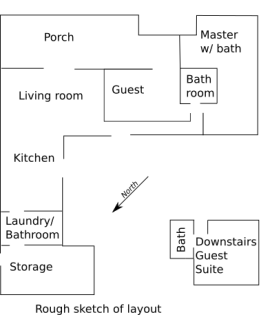
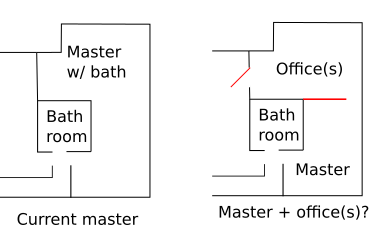
A few days later on the video call, we were amazed to find that the designer didn’t think that we were crazy people for sending her a 12 page document before even the initial consultation. She even read it, as evidenced by her being able to refer to requests we made deep within the document. We really liked her and Amanda was delighted to discover that she had designed the gorgeous interior for a local bar.
However, the designer did give us a reality check on timelines and the feasibility of living in a house that was being remodeled. Depending on the exact scope of work we agreed to, she anticipated design, construction, and furnishing to take 4 to 8 months. We asked about living in the house during that time and she said that would add a lot of cost. It’ll be significantly cheaper, and probably faster overall, if the house is unoccupied and devoid of furniture during the work.
We talked about it after the call and decided that we’re ok continuing to live at our current home until the renovations are complete. But we did decide that Dave will set up a temporary office in the new home on a folding desk and we might get a queen-sized air mattress to sleep on some nights. We’ll also get a dorm fridge and some chairs for the deck, even if just our folding beach chairs, so we can have a few guests over to enjoy the view.
Ebike
Dave doesn’t own a car. He doesn’t like cars or driving. He chose the location of our current home based on it being in the downtown Hilo area, so he can walk for most errands, from shopping to visiting his primary care physician. On rare occasion, he needs to take a bicycle or the bus. However, one of the tradeoffs we made in choosing the new home was that it’s in the suburbs. The grocery store will be three miles each way, which is too far for walking. It’s also hilly, so any bicycle ride into downtown will be a sweaty affair, which is fine for shopping but less appealing for medical or professional appointments. So Dave decided he needed an ebike.

He also decided he didn’t want to wait for the new house to close before buying the ebike, so it arrived last Friday night (Jan 31st) and he’s been riding it for a week now. He loves it.
The ebike turns long trips by bike into medium trips, and it turns hills into flats. Dave removed the throttle from the bike, so he still needs to pedal, but the bike has five levels of pedal boost, from “a little help” to “warp speed”. It also gets good range; Dave rode 30 miles yesterday (Feb 8th), starting out on level two (moderate help) and heading home on level five (warp speed), and he still had plenty of battery left.
Dave’s only regret is that he didn’t get an ebike earlier. Living car-free is a challenge, but a moderate-priced ebike that goes moderate distances at moderate speeds without making its rider all sweaty is a huge improvement.
Old photo
The house overlooks what has been the main surfing spot for this side of the island for about a hundred years (since the construction of the Hilo breakwater in 1929 prevented large waves from entering Hilo Bay). That means the house appears in thousands of old photographs and videos. Dave was researching old videos to determine when various improvements and extensions were made to the house when he stumbled upon a photo of Honoli’i Bay from 1893.
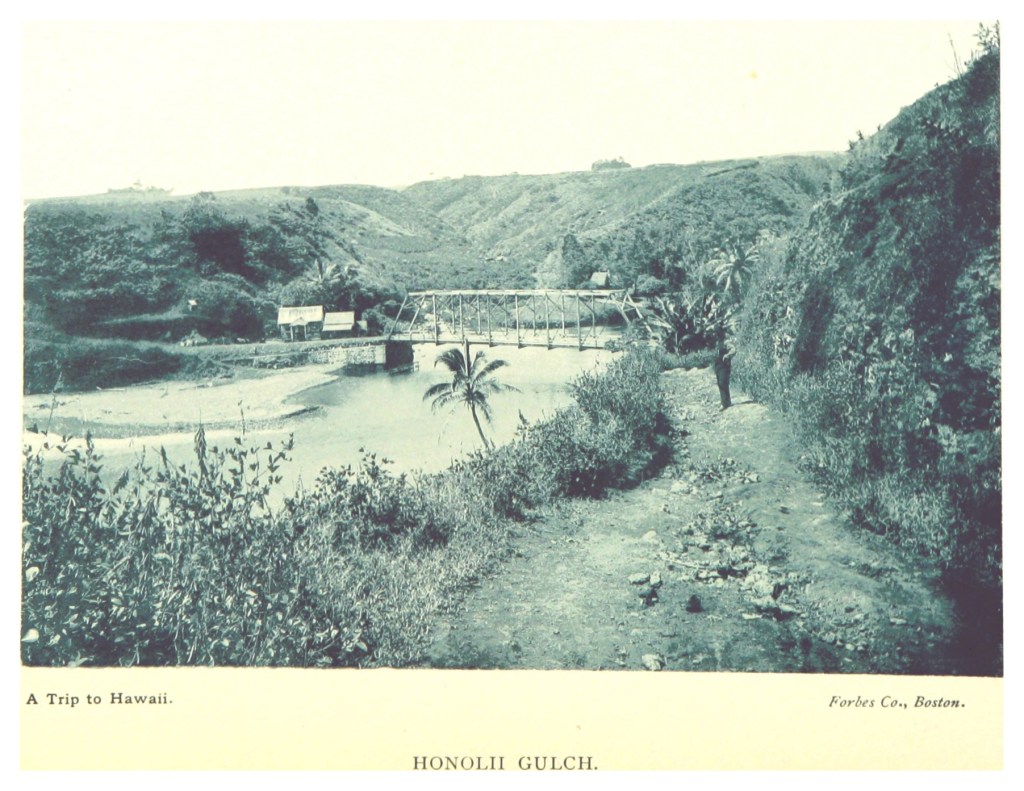
Dave believes the photographer is standing on the property that we’re buying. The area has eroded a bit and is overgrown, but on recent drone videos you can still clearly see the dirt path the photographer is standing on. Dave hopes to create a modern replication of the photo after we move in.
Conclusion
If all goes well, we should close on the house in a little over a week.
 McHardmahon.com
Leave a comment